
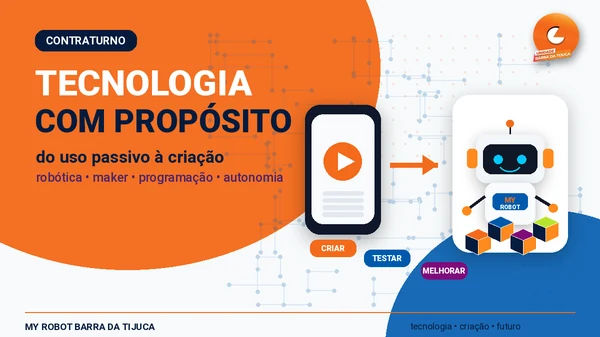
Not every after-school activity has the same impact. Some just fill the agenda. Others help the child build repertoire, discipline, autonomy and confidence. When families look for an extracurricular activity with purpose, they are usually looking for something beyond entertainment: they want an experience that develops their child in a visible and consistent way.
Technology enters this debate with force because it is part of children's lives. The challenge is not simply to keep children away from digital. The challenge is to improve the quality of the relationship she builds with him. There is a huge difference between spending hours consuming videos and using technology to put together a project, program a sequence, model an object, create a game or solve a real problem.
A good technological activity after school does not compete with school. It complements training, offering practical experiences that the school routine often fails to deepen. Robotics, programming, electronics, games, 3D printing and maker workshops can develop important skills, as long as they are within a clear methodology.
The problem is not the screen. It's passivity.
Many conversations about childhood and technology start with the question: “how to reduce screen time?”. The question is important, but incomplete. Reducing minutes can help, but it doesn't solve everything if the child continues without interesting alternatives, without concrete challenges and without a routine that encourages creation.
The main point is passivity. When technology becomes an automatic refuge from boredom, tiredness or waiting, it tends to take up too much space. The child consumes ready-made stimuli, receives quick rewards and becomes accustomed to interactions with low cognitive demands.
Purposeful technology changes this logic. In a maker or robotics class, the student needs to think, decide, build and test. He stops just watching something work and starts understanding how it works. This transition from consumption to creation is what gives pedagogical value to the use of technology.
What makes an extracurricular activity truly formative?
The first characteristic is pedagogical intention. The activity needs to have clear objectives, progression and coherence with the student's age. It's not enough to put parts, computers or 3D printers in a room. It is necessary to know what the child will develop at each stage.
The second is protagonism. The student must actively participate in the process. He assembles, programs, experiments, makes mistakes, adjusts and presents. Uma atividade em que a criança apenas copia um modelo sem entender o raciocínio por trás tende a gerar encantamento inicial, mas pouco desenvolvimento duradouro.
The third is mediation. The instructor must not do anything for the child or leave them lost. His role is to guide, provoke reasoning, explain concepts when necessary and respect different ways of thinking. This balance is essential for the student to gain autonomy without becoming frustrated.
The fourth is continuity. One-off workshops can be interesting, but real evolution appears when challenges grow in an organized way. A child who today works on sequence and cause and effect may tomorrow progress to programming using blocks, sensors, logic, automation, games, modeling or AI, depending on maturity and interest.
The role of maker workshops
The maker movement gained ground because it brings learning and practice closer together. The child does not just study an idea; she tries to materialize it. You can build a prototype, program a behavior, test a mechanism, reuse materials, create a game or solve a challenge with limited resources.
This type of environment develops an increasingly important skill: transforming imagination into execution. Creativity without process can become just fantasy. A process without creativity can become a repetition. A well-run maker workshop unites the two.
Furthermore, practical projects help children understand that knowledge is not separated into “subjects”. The same challenge can involve mathematics, science, language, art, engineering, planning and communication. This makes learning more meaningful.
How to reduce screen time without turning the house into war
Reducing passive screen use works best when there is replacement, not just prohibition. Children resist less when they find alternatives that really involve body, mind and curiosity.
A practical strategy is to create a routine with predictable times for screen time, study, rest, movement, and creation. Predictability reduces conflict. Another strategy is to differentiate types of use: watching videos without purpose is not the same as programming a game, building a project or researching to solve a challenge.
Purposeful technology activities help because they provide a bridge. The family doesn’t have to just say “get off the screen.” You can say: “let’s use technology to create something”. This change preserves the child's natural interest in digital, but directs this interest towards development.
What parents should look for before choosing
Before enrolling, it is worth asking objective questions. What is the methodology? Como os alunos evoluem por idade? What skills are worked on in addition to technique? How does the teacher monitor difficulties? Does the child bring projects, records or presentations throughout the course? Is there room for creativity or just reproduction?
It is also important to observe the environment. Is he organized? Are the materials suitable? Does the class have a beginning, middle and closing? Does the student understand what they are doing? Do parents receive clear feedback on progress?
A good technological course is not sold just for the equipment. He can explain why that equipment is there and what type of learning it allows.
Extracurricular activities should not result in excessive charges
Purpose does not mean turning childhood into competition. A quality extracurricular activity respects the student's rhythm, preserves playfulness and offers appropriate challenges. The objective is not to anticipate the job market, but to strengthen skills that will be useful in any path.
Children need to feel that they are capable of learning, creating and improving. When the experience is good, it doesn't just come out with a finished project. You leave with more repertoire to think about, more confidence to try and more maturity to deal with challenges.
How methodology makes a difference
In practice, the difference between a generic activity and a formative activity lies in the combination of method, mediation and experience. The My Robot methodology values project construction, action, autonomy, creativity, playfulness and the use of technology as a language of creation. This prevents the class from becoming just a demonstration of tools.
This care also helps the family to see results. Development appears in small signs: the child explains better what he did, organizes materials more responsibly, tries again after making mistakes, asks more elaborate questions and begins to see problems as solvable challenges.
In the end, choosing technology with purpose is choosing a smarter relationship with the future. It’s not about adding another screen to the child’s life. It is offering a space in which she learns to think, create and act with meaning.
Next learning paths
If this topic made sense for your family, these tracks help turn curiosity into practical projects.

Firstbot
For ages 5 to 7, with playful, concrete and guided first steps in robotics.
View course
Onebot
Building and block-based programming to develop logic, autonomy and applied creativity.
View course
Skillbot
Robotics challenges with more strategy, decision-making and problem solving.
View courseProducts to keep exploring at home
These Maker Store options match the article topic and help turn curiosity into hands-on projects.
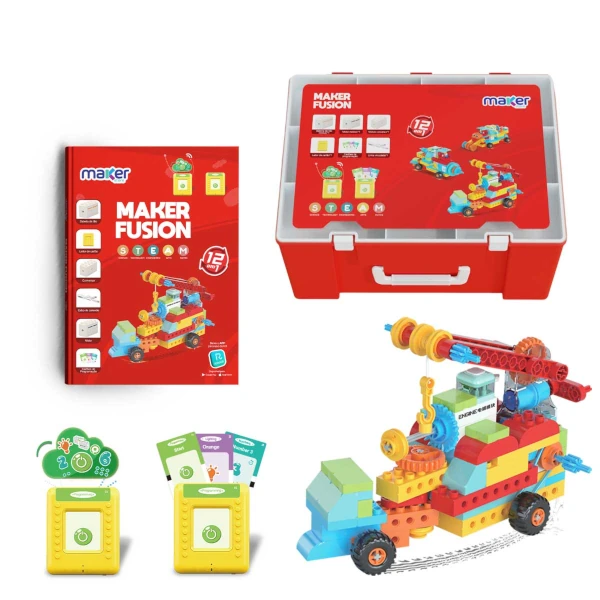
Maker Fusion 12-in-1 Kit
Building projects that organize steps, attention to detail and hands-on experimentation.
View in Maker Store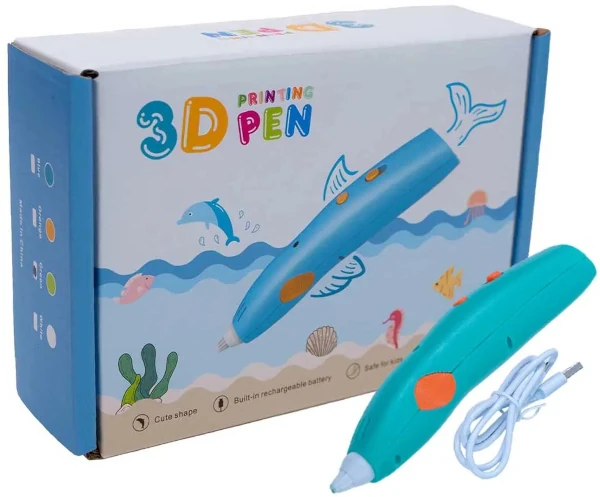
3D Printing Pen with filament and molds
Helps turn ideas into objects while encouraging creativity, coordination and prototyping.
View in Maker Store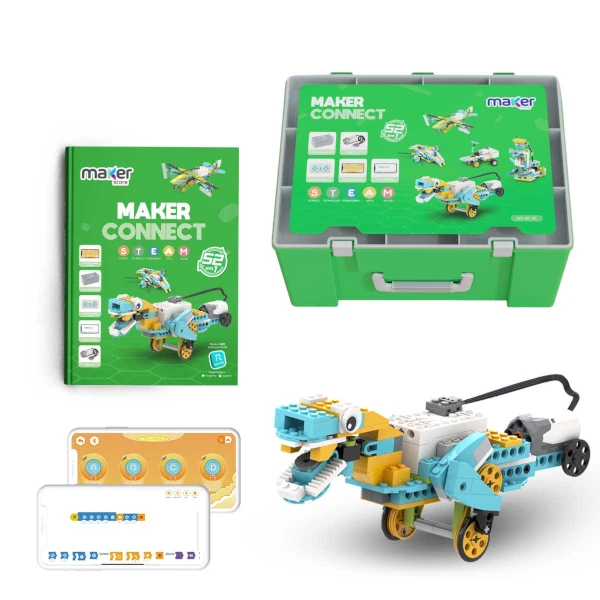
Maker Connect 52-in-1 Kit
Expands building possibilities and encourages children to test different solutions.
View in Maker StoreAffiliate links: when you buy through these links, you support My Robot Barra da Tijuca.
Want to see technology in practice?
At My Robot Barra da Tijuca, children and teens learn technology by creating projects, testing ideas and developing autonomy.