
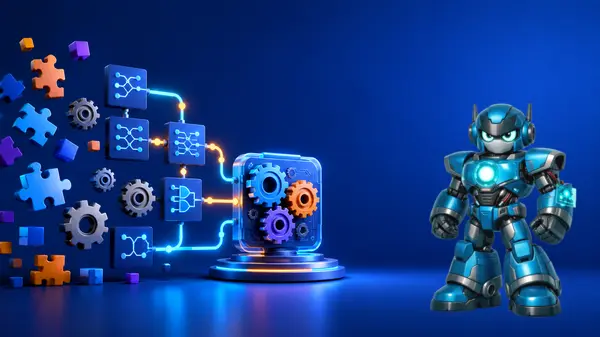
When a child builds a robot, programs a movement, or tries to figure out why a project didn't work as expected, they are doing much more than playing with technology.
She is learning to think more organized, to observe details, to create hypotheses, to make decisions and to seek solutions.
This is why educational robotics has gained so much space in the training of children and teens.
It transforms concepts that often seem abstract, such as logic, sequence, cause and effect, into concrete experiences.
The student sees, touches, assembles, tests and perceives the results of their own choices.
At My Robot Barra da Tijuca, robotics is used as an active learning tool.
The objective is not just to teach technology, but to help students develop important skills for school, life and the future: logical reasoning, creativity, autonomy, persistence, organization, concentration, teamwork and the ability to solve problems.
What is logical reasoning?
Logical reasoning is the ability to organize ideas in a coherent way to understand a situation, identify relationships between information and reach a conclusion.
In simple language, it is “thinking in order”. This is when the child is able to realize that one action leads to another, that there is a sequence to carry out a task and that some choices produce certain results.
For example: to assemble a robot that moves forward, the student needs to observe the parts, follow steps, connect components, organize commands and test that everything works.
If the robot doesn't move, it needs to investigate: is the part in the right place? Was the engine connected correctly? Is the schedule in the proper order? Was there a command missing?
This process encourages the student to think before acting, to analyze possibilities and to understand that solving a problem requires attention, planning and trying.
In childhood and adolescence, this type of skill is very important because it also helps in other areas of learning, such as Mathematics, Science, reading statements, organizing studies and making decisions in everyday life.
Educational robotics and mental organization
Educational robotics contributes to mental organization because each project has a structure: beginning, middle and end.
Before reaching the working robot, the student goes through steps.
He needs to understand the challenge, know the concept of the class, separate materials, assemble the structure, program, test, adjust and organize what was used.
This helps to develop a clearer way of thinking.
In practice, the child learns that great goals can be achieved in parts. A robot is not born ready-made. It is built step by step. Similarly, a complex problem can be broken down into smaller problems.
This ability is known, in computational thinking, as decomposition. Decomposing means dividing a large challenge into smaller, easier-to-solve steps.
Instead of thinking “I need to make a robot work”, the student learns to think:
- What is the role of the robot?
- What parts do I need to use?
- What will be the structure?
- What commands should he follow?
- How will I test?
- What can I improve?
This way of thinking strengthens mental organization, attention and concentration. The child begins to realize that the solution does not depend on guesswork, but on observation, method and persistence.
How children learn to solve problems in practice
One of the greatest benefits of educational robotics is that the problem appears in front of the student in a concrete way.
Instead of just answering a question on paper, the child needs to make something work.
She sets up a project, observes the robot's behavior and evaluates whether the result corresponds to the proposed objective.
When something doesn't go as expected, a real learning opportunity arises.
Imagine a student programming a robot to avoid an obstacle. If the robot crashes, it needs to think: did the sensor perceive the object? Was the distance set correctly?
Did the turn command come before or after the forward command? Was the movement time sufficient?
In this process, the child develops logical sequence, which is the ability to organize actions in an order that makes sense.
It also develops the notion of an algorithm, which can be explained simply as a list of steps to solve a problem or perform a task.
A cake recipe, for example, is a type of algorithm: first you separate the ingredients, then mix them, put them in the oven and wait for the right time.
In programming, the student also organizes steps. If the order changes, the result changes.
This learning is very powerful because it shows the child that thinking well makes a difference. She comes to understand that each decision influences the final result.
Error, testing and improvement: learning is also adjusting
Many families still associate mistakes with failure. In educational robotics, error is an essential part of the process.
When a project doesn’t work, it doesn’t mean the student “doesn’t know.” It means that there is something to be observed, analyzed and improved. This perspective changes the child’s relationship with difficulty.
Robotics teaches that testing, making mistakes, correcting and trying again is part of building a good solution.
This logic brings the student closer to an investigative stance: they learn to ask questions, raise hypotheses and verify results.
This process develops persistence, frustration tolerance and self-confidence. Little by little, the child understands that the first attempt will not always be the best, but that each attempt offers new information.
This is a very important point for child development.
When the student realizes that they can improve a project with adjustments, they also learn that they can improve their way of studying, communicating, working in groups and facing challenges.
Robotics, computational thinking and everyday life
Computational thinking does not mean “thinking like a computer”. It means using organization and problem-solving strategies that are very present in computing, but that also apply to life.
Among these strategies are:
- Decomposition: dividing a large problem into smaller parts.
- Pattern recognition: noticing repetitions and similarities.
- Abstraction: identifying what is most important in a situation.
- Algorithm: create a sequence of steps to solve a challenge.
In robotics and programming for children, these concepts appear in a practical way. The student identifies patterns when they notice that certain commands are repeated.
It works on abstraction when choosing which information really matters to make the robot work. Creates algorithms when organizing the sequence of commands.
Uses decomposition when dividing assembly or programming into steps.
These skills also appear outside the classroom.
When organizing a backpack, planning studies, putting together a presentation, resolving a conflict or deciding the best way to carry out a task, children use logical reasoning and mental organization.
Therefore, robotics for teenagers and children should not be seen just as preparation for technological careers. It also contributes to forming students who are more autonomous, creative and capable of thinking clearly.
How the My Robot methodology favors this development
The My Robot methodology values active learning, playfulness, autonomy, creativity and project construction. This means that the student does not just listen to explanations.
He participates, builds, tests, asks, creates and improves.
The class integrates theory and practice. First, the student comes into contact with a concept. Then, apply this concept to a concrete project.
This relationship between explanation and experience helps to make learning more meaningful, because the child understands what that knowledge is for.
Another important point is respect for each student’s learning pace. Each child has their own time to understand, assemble, program and test.
In a well-conducted methodology, the instructor follows this process, encourages reasoning, guides when necessary and values different ways of thinking.
At My Robot Barra da Tijuca, technology is treated as a learning tool. The focus is not just on the final robot, but on the path the student takes to reach the result. This path develops hard skills and soft skills.
Hard skills are technical skills, such as programming logic, robotics concepts, notions of electronics, mechanics, automation and use of digital tools.
Soft skills are behavioral and socio-emotional skills, such as communication, empathy, organization, responsibility, persistence, collaboration and autonomy.
This combination is essential. A student can learn to program, but they also need to learn how to explain their ideas, listen to colleagues, deal with errors, organize materials, make decisions and work as a team.
In practical projects, the child experiences all of this at the same time. She thinks, assembles, tests, talks, adjusts, compares results and creates new possibilities. Learning becomes more alive, more concrete and closer to reality.
Educational robotics: learning to think better
The great value of educational robotics is in teaching children to think better.
This does not happen through ready-made formulas, but through experiences. With each project, the student learns that an idea needs to be organized. That a command needs to have a sequence.
That a solution can be tested. That the error may indicate a new path. That big problems can be solved in parts. That creativity and logic can go together.
When a child builds a robot, they also build a more structured way of thinking. When you program a movement, you organize commands and observe the result.
When you work as a team, you learn to communicate ideas and respect other forms of reasoning. When you make mistakes and try again, you develop persistence.
Therefore, a robotics course for children can greatly contribute to children's logical reasoning.
And, when this teaching is done with methodology, playfulness and pedagogical support, technology stops being just entertainment and becomes a powerful ally of learning.
Conclusion
Educational robotics helps children and teens develop logical reasoning, mental organization, attention, creativity, autonomy and problem-solving skills.
More than learning about robots, the student learns to observe, plan, test, correct and build solutions.
At My Robot Barra da Tijuca, each robotics class is designed to transform technology into a learning experience.
Students learn by doing, respecting their own pace and developing important skills for school, life and the future.
If you want your child to have contact with technology in an educational, creative and safe way, get to know My Robot Barra da Tijuca and schedule a trial class.
It can be the first step on a journey of discovery, autonomy and logical thinking.
Sources consulted
- Ministry of Education – National Common Curricular Base (BNCC)
- Ministry of Education – Computing in Basic Education: Complement to BNCC
- Ministry of Education – Opinion and standards on Computing in Basic Education
- Ministry of Education – Approved opinion defining standards on teaching computing in basic education
- Joint Research Center / European Commission – Developing Computational Thinking in Compulsory Education
- Joint Research Center / European Commission – Reviewing Computational Thinking in Compulsory Education
- UNESCO – Computational thinking, artificial intelligence and education
- UNESCO – Technology in education: 2023 GEM Report
- ACM / University of Lisbon – Inclusion as a Process: Co-Designing an Inclusive Robotic Game with Neurodiverse Classrooms
Want to see this happen in practice?
At My Robot Barra da Tijuca, children and teenagers experience technology in a progressive, creative and hands-on way. If you want to understand which trail makes the most sense for your family, talk to our team.
Courses to develop logical reasoning in practice
Logical reasoning matures when the student organizes ideas, tests hypotheses and realizes the results of their own decisions. These trails work on this process with progressive challenges.

Onebot
Robotics and block programming to transform sequence, cause and effect into concrete and creative projects.
Discover the course
Skillbot
Robotics challenges that encourage problem analysis, decision making, strategy and critical thinking.
Discover the course
Techbot
Sensors, engineering and automation to apply logic to more complete systems and strengthen technical autonomy.
Discover the courseProducts to train logic, trial and adjustment
As the article talks about mental organization and problem solving, these products were chosen because they encourage assembly, sequence, testing and improvement.
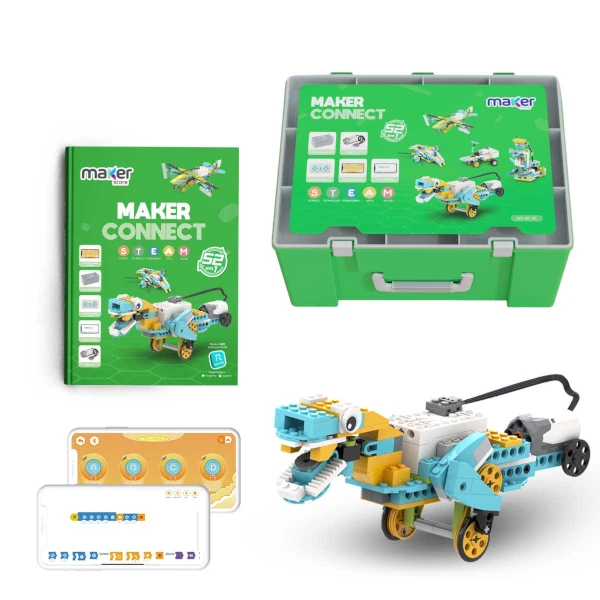
Maker Connect 52 in 1 Kit
A kit with many combinations to challenge the student to plan, assemble, test and review solutions.
View on Maker Store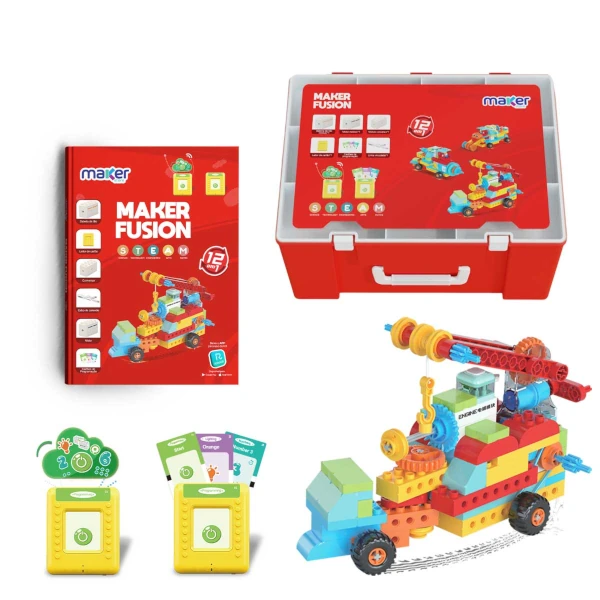
Fusion Maker Kit 12 in 1
Robotics projects to work on logical reasoning, reading steps and building solutions.
View on Maker Store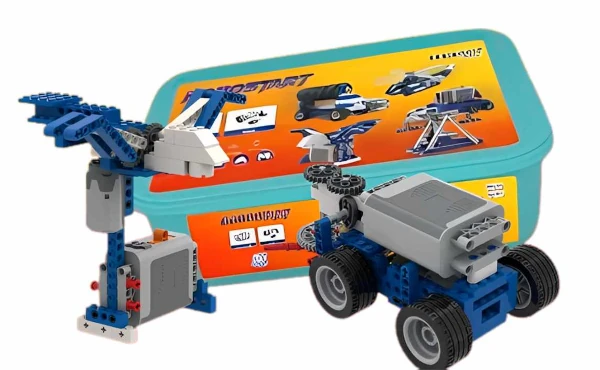
Robotstart 50 in 1 Kit
Good option to expand assembly repertoire and transform errors, testing and correction into learning.
View on Maker StoreAffiliate links: by purchasing through these links, you support My Robot Barra da Tijuca.